RFID can improve visibility across hospital workflows, from locating medical equipment and managing inventory to identifying sterile-wrapped surgical trays and documenting specimen handoffs. Successful RFID implementation in healthcare starts with understanding the operational problem, the information teams need, and where automated capture can improve the workflow.
Hospitals depend on thousands of physical items moving through clinical and operational environments every day. Equipment needs to be available when clinicians need it. Inventory needs to be visible and accurate. Surgical trays need to reach the right case. Specimen handoffs need to be documented. Device data needs to reach the systems that depend on it.
When those physical workflows and information systems become disconnected, staff often fill the gaps through manual searches, inventory counts, documentation, reconciliation, and data entry.
Better visibility can reduce time spent searching and reconciling information, help organizations use existing assets more effectively, and give leaders stronger data for inventory and capital decisions.
RFID and other automated data-capture technologies can help reduce those visibility gaps. ID Integration's updated Healthcare Solutions Guide takes a deeper look at how passive RFID, RTLS, intelligent barcode capture, and connected systems can improve operational visibility across healthcare.
The right RFID use case depends on what the healthcare organization needs to identify, locate, count, or document. Common healthcare RFID use cases include equipment, surgical trays, specimens, and inventory.
Medical equipment moves between departments, patient care areas, storage locations, and other spaces throughout a hospital. When equipment cannot be readily located, staff may spend valuable time searching for it.
Passive RFID can automatically identify tagged equipment at configured read points. Handheld RFID also gives staff a practical way to search for a specific tagged asset when its exact location is unknown.
For workflows that require more frequent or precise location awareness, healthcare RTLS can provide an additional level of location information.
Perioperative teams face a distinctive identification challenge. Once a surgical tray has been sterilized and wrapped, staff need to identify it without opening the sterile packaging and compromising sterility.
Passive RFID can help teams identify properly tagged, sterile-wrapped trays without breaking the wrap, creating better visibility as trays move toward the right case and OR.
That visibility can support case readiness, reduce unnecessary searches, and help avoid unnecessary opening or reprocessing when a tray's identity or location is unclear.
Specimens may pass through multiple collection, transport, intake, storage, and processing steps. Each handoff creates another point where visibility can be lost.
Configured RFID read points can automatically record tagged specimens as they move through defined workflow transitions, creating an electronic record of observed events. When a specimen cannot be readily located, handheld RFID helps staff search for the specific tagged item.
Captured events can also help teams determine where an expected handoff or receipt event was not observed, giving staff better information when investigating a delayed or missing specimen.
Hospitals manage everything from routine supplies to implants, medical devices, and other high-value inventory. Manual inventory processes can make it difficult to maintain an accurate picture of what is actually available.
RFID can automate the identification of tagged inventory at meaningful points in the workflow. Better inventory visibility can reduce reliance on manual counts, support replenishment decisions, improve visibility into high-value inventory, and provide more reliable information for expiration and recall management.
Successful RFID implementation involves more than selecting tags and readers. The physical environment, workflow, infrastructure, systems, and information requirements all influence the design.
Before selecting the technology, healthcare organizations should understand:
These considerations help determine which technology and system architecture are appropriate for the workflow. Start with a workflow and systems assessment to define these requirements.
RFID can address many healthcare visibility challenges, while other workflows require different types of information and data capture. The operational requirement determines the appropriate technology, infrastructure, and system design. Passive RFID can automatically identify tagged items without line-of-sight scanning. Fixed readers can capture tagged items at configured read points, while handheld readers can support inventory and proximity-based search. Healthcare RTLS supports use cases requiring more frequent location awareness. The appropriate technology and infrastructure depend on how frequently location information needs to update and the level of location precision the workflow requires.
Intelligent barcode capture can support workflows such as FDA UDI data capture. ID Integration's BarCodeOS® scanners can validate captured barcode data against configured rules, identify barcode issues, parse required UDI elements, format the data, and deliver it to the receiving hospital system. Documented barcode issues can also support feedback to suppliers and greater supplier accountability.
Matching these technologies to the workflow allows healthcare organizations to build the level of visibility the operation actually requires.
ID Integration's updated Healthcare Solutions Guide takes a closer look at healthcare visibility challenges and use cases for equipment, surgical trays, specimens, high-value inventory, UDI data, recall management, and more.
Every healthcare RFID implementation begins with a specific operational problem. If your team is trying to improve equipment visibility, inventory accuracy, surgical tray identification, specimen handoffs, or another physical workflow, talk with ID Integration about what you're trying to improve. Reach out by phone at (425) 438-2533 or contact us here.
Healthcare supply chain leaders are under increasing pressure to do more than manage inventory. They are being asked to reduce delays, improve accountability, support clinical workflows, and provide the visibility needed to make better operational decisions across the hospital.
At AHRMM26, July 26-28 in San Antonio, Texas, ID Integration will be showcasing how hospitals are using passive RFID visibility solutions to create certainty at the workflow moments that matter most.
Visit us in Booth 1120 to explore practical applications for asset tracking, specimen chain of custody, surgical tray management, inventory visibility, and medical device tracking.
Healthcare organizations continue to face staffing constraints, increasing supply chain complexity, and growing pressure to improve operational performance without adding resources.
As a result, visibility is no longer viewed as a technology initiative alone. It has become a strategic capability that helps hospitals reduce uncertainty, improve resource utilization, strengthen accountability, and support clinical teams with better operational intelligence.
The most successful organizations are focusing visibility efforts on the operational moments where delays, missing information, and manual processes create measurable consequences.
Hospitals do not need to track everything everywhere.
They need visibility at the points where missing information creates delays, unnecessary costs, compliance concerns, or patient safety risks.
ID Integration helps healthcare organizations identify those critical workflow moments and deploy technology that captures meaningful events automatically. The result is greater accountability, faster decision-making, and fewer manual processes.
Whether you are managing equipment, specimens, surgical inventory, or clinical supplies, the goal remains the same: ensuring the right item is in the right place at the right time.
When equipment cannot be located quickly, staff spend valuable time searching while departments often compensate by purchasing or renting additional assets.
RFID-based asset tracking provides rapid inventory capabilities and near real-time visibility into the location and status of critical equipment.
The objective is reducing search time, improving utilization, and helping caregivers spend more time focused on patients.
Every specimen represents a diagnosis, a treatment decision, and a patient's trust.
Yet many healthcare organizations still rely on manual processes and documentation throughout the specimen journey.
At Booth 1120, learn how RFID can create an auditable chain of custody from collection through laboratory receipt by automatically documenting critical handoffs and workflow events.
For many hospitals, specimen tracking has become one of the highest-value applications for workflow visibility.
Missing trays, incomplete sets, and unnecessary searches create operational challenges that can impact scheduling and staff efficiency.
RFID allows healthcare teams to identify and locate surgical trays without opening wrapped sets or breaking sterile barriers.
By capturing movement and status automatically, hospitals gain visibility without adding steps for sterile processing teams.
Managing high-value supplies and critical inventory requires more than periodic counting. RFID enables healthcare organizations to automate inventory awareness and quickly identify affected products when recalls occur.
The result is more accurate information and less reliance on manual inventory processes.
Hospitals and medical device manufacturers share a common challenge: maintaining visibility into implants, loaner kits, and consigned inventory as products move through complex workflows.
ID Integration helps healthcare providers and manufacturers create greater accountability across the entire process.
The ability to capture movement automatically helps eliminate uncertainty and improve coordination between providers and vendor partners.
Many healthcare organizations have experimented with tracking technologies in isolated departments. The challenge is often not proving that the technology works. The challenge is to create a governance model and operational framework that allows visibility initiatives to scale across the organization.
At AHRMM26, learn how healthcare systems are moving beyond individual pilots and building visibility strategies that support long-term operational goals, integration requirements, and cross-department adoption.
Visibility is becoming an operational infrastructure for modern healthcare organizations.
The healthcare industry continues to invest in technologies that improve efficiency, strengthen accountability, and support better patient outcomes.
At ID Integration, we help organizations move beyond isolated pilots and toward scalable visibility strategies that deliver measurable operational value.
Stop by Booth 1120 to meet our team, explore live demonstrations, and discuss the workflow challenges your organization is working to solve.
Whether your focus is healthcare asset tracking, RFID specimen tracking, surgical tray visibility, hospital inventory management, or medical device accountability, we look forward to showing how event-based visibility can help create greater operational confidence across your healthcare system.
Hospitals do not struggle with a lack of technology options. They struggle with repeatable workflows that staff can follow, leadership can measure, and IT can support. When guidance is too abstract, initiatives stall, teams fall back to manual workarounds, and visibility never becomes operational confidence.
To make it easier to move from ideas to execution, we published two field guides focused on the workflows that most often create risk and friction across hospitals and IDNs: specimen custody and hospital equipment visibility. These guides are written to be shared internally, used during planning, and referenced during rollout.
Specimen handling has one unforgiving trait: once a handoff is missed, it is hard to reconstruct what happened. A reliable custody trail must match how specimens actually move from collection to receiving, accessioning, and processing. The Specimen Tracking Field Guide walks through a practical operating model, the points where custody typically breaks, and the metrics that show whether improvements are being made.
If you want deeper reading beyond the core playbook, the Articles section includes additional examples and supporting perspectives.
Equipment visibility problems show up in familiar ways: clinicians lose time searching, rentals increase just in case, and utilization becomes guesswork. The Hospital Asset Tracking Field Guide focuses on real-world patterns that reduce time-to-find and improve confidence at critical workflow points. It also outlines what to measure so teams can show improvement, sustain the process, and scale across departments.
For additional use cases and implementation notes, the Articles section provides more depth.
These were created as use-case-focused references, not broad marketing pages. Each guide is structured around where the workflow breaks down in real operations, the minimum set of checkpoints and recovery steps that close gaps, KPIs that indicate whether the program is improving or drifting, and rollout patterns that support adoption and standardization.
If you prefer a single place to browse supporting content, videos, and FAQs, our resources hub is here.
If your team is early in planning, start with the workflow and challenge sections to align stakeholders on what is changing and why. If you are already piloting or have partial visibility in place, go straight to the measurement and rollout guidance so you can tighten consistency.
If you would like help turning the guide into a plan, schedule a short walkthrough to map your workflow and identify the highest-impact starting point.
Healthcare organizations are under increasing pressure to reduce delays, improve workflow coordination, and operate with greater certainty across clinical and operational environments.
When a specimen cannot be verified, when a surgical tray is missing before the first case, or when clinicians spend valuable time searching for equipment, operational delays ripple throughout the hospital.
At the Track & Trace Transformation Summit 2026 hosted by ID Integration and Zebra Technologies, healthcare leaders explored how RFID, AI, and event-based visibility strategies are helping hospitals reduce operational blind spots tied to specimens, surgical trays, mobile assets, and inventory workflows.
One of the core themes throughout the summit was that healthcare organizations do not necessarily need continuous location tracking for every item or workflow. They need certainty at the workflow moments where delays, risk, and uncertainty create operational consequences.
That includes moments such as:
As staffing pressures and operational complexity continue to increase, healthcare organizations are looking for ways to reduce workflow uncertainty while improving coordination across departments and teams.
The summit discussions focused heavily on how passive RFID, AI-driven insights, and connected operational workflows can help healthcare organizations move beyond isolated pilot projects toward scalable visibility strategies that support broader digital operations initiatives.
“Hospitals do not need to track everything everywhere. They need certainty at the workflow moments where delays, risk, and uncertainty create operational consequences.”
The full replay includes presentations and discussions focused on reducing operational blind spots, improving workflow coordination, and building more connected healthcare operations through RFID, AI, and event-based visibility strategies.
To learn more about healthcare visibility and automated traceability solutions, visit our Resources page.
Organizations evaluating specimen tracking, surgical tray visibility, healthcare asset tracking, or broader operational visibility strategies can also explore ID Integration’s field guides and workflow resources:
specimentracking.com
hospitalassettracking.com
Healthcare organizations continue to evaluate how RFID, AI, and connected operational workflows can reduce delays, improve coordination, and support greater workflow certainty across complex healthcare environments. If your organization is exploring healthcare asset tracking, specimen tracking, surgical tray visibility, or broader operational visibility strategies, ID Integration can help you evaluate practical approaches aligned with your workflows and operational goals. Contact us for a personalized online or in-person demo.
Hospitals are being asked to improve performance while reducing labor, controlling capital spend, and minimizing risk. Yet teams still lose time searching for equipment, unnecessarily reprocessing trays, and manually tracking high-risk specimens and inventory.
At HIMSS 2026 in Las Vegas, March 9–12, ID Integration will be in the Zebra Technologies Pavilion, Booth #2435, demonstrating how passive RFID delivers real visibility across assets, trays, specimens, and inventory without disrupting existing systems.
See how passive RFID helps clinical engineering and nursing teams quickly find IV pumps, ventilators, and wheelchairs. Improved utilization reduces emergency rentals, prevents duplicate purchases, and supports smarter capital planning.
Wrapped trays can be confirmed instantly without opening them, reducing reprocessing costs and avoiding preventable OR delays. Tray-level traceability supports Joint Commission and FDA expectations while improving accountability.
Automated reads at key handoffs create an audit-ready history that reduces the risk of lost or misidentified specimens and protects patient safety.
Gain clearer insight into implant usage, expiration risk, and stock levels. Automated data capture reduces manual counts and helps supply chain leaders move from reactive replenishment to proactive management.
Passive RFID integrates with EHR, CMMS, LIS, and ERP platforms, strengthening current workflows rather than adding another silo. Real-time intelligence supports the shift from manual processes to predictive operations, aligning with the majority of hospitals investing in workflow automation and location technologies.
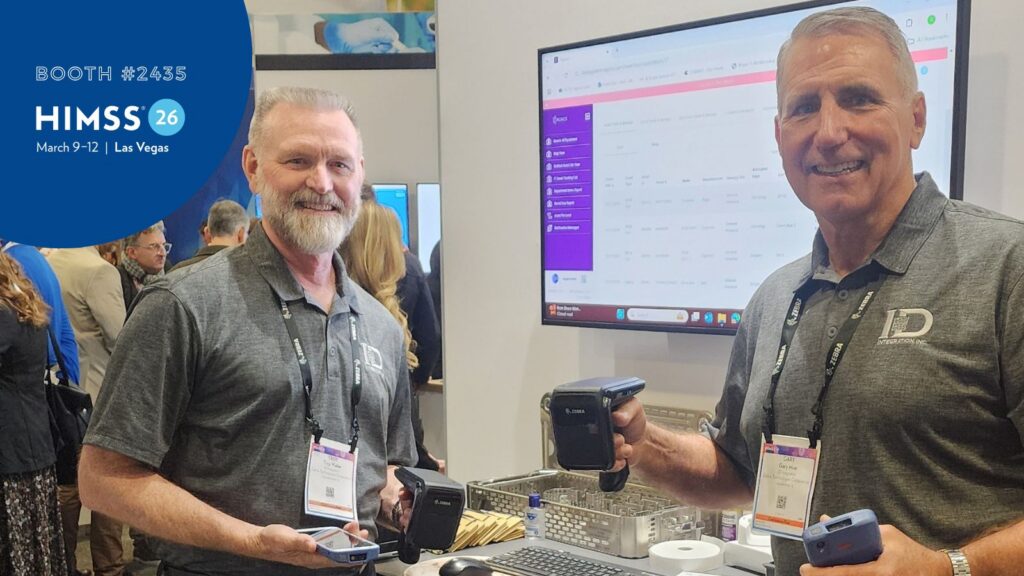
Visit Booth #2435 for a live walkthrough or schedule a one-on-one conversation during exhibit hours. Contact Troy Waller, VP Healthcare, at (916) 945-1147 to reserve time.
When a surgical specimen goes missing or is mislabeled, cases stall, re-collections follow, and confidence erodes. In the operating room, minutes are compressed and handoffs are frequent. Barcode labels help at single touchpoints, but they do not show what happens between them.
OR specimen tracking requires visibility across every transition, not just confirmation at pickup and receipt. Passive RFID closes these gaps by automatically recording specimen movement and giving teams a fast, reliable way to recover off-route items. This article outlines a practical hospital specimen tracking model that health systems can standardize across operating rooms and pathology workflows.

Specimen tracking in the OR breaks down for predictable reasons. Look-alike containers, rapid handoffs, and competing priorities make manual logs unreliable. A specimen can move from the sterile field to a pass-through, to dispatch, to courier pickup, and to lab receiving in minutes.
When even one step is missed, the trail goes cold. Staff are forced into time-consuming searches or repeat collections. The goal of hospital specimen tracking should be simple: create a searchable chain of custody from the OR to accessioning in Histology or Cytology without adding new steps for clinical teams.
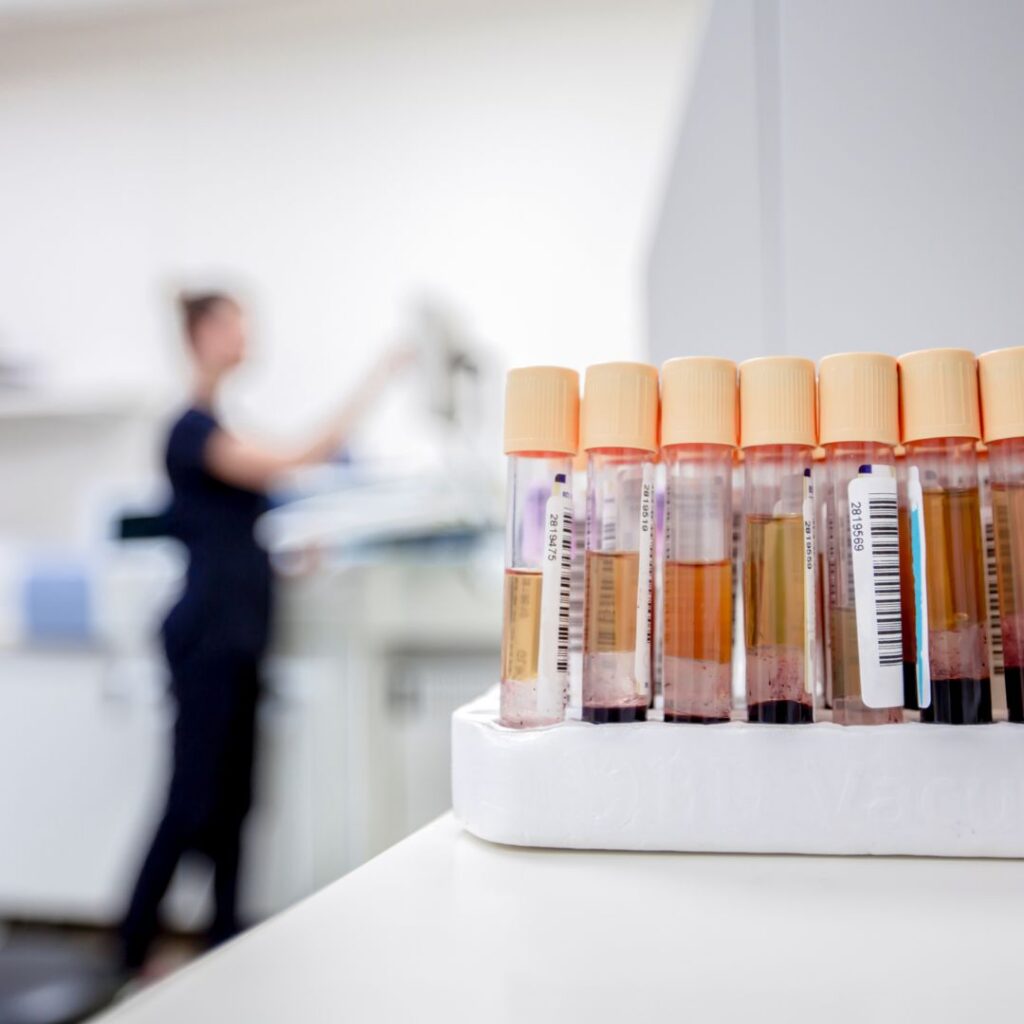
OR specimen tracking with RFID begins at label printing. At that moment, the specimen container also receives a passive RFID tag carrying a non-PHI identifier linked to the LIS order.
From there, fixed RFID readers do the work in the background. Placed at natural transition points such as OR core doors, pass-through windows, specimen dispatch desks, unit exits, and lab receiving thresholds, these readers automatically record time and location events as specimens move.
Staff continue to work as they always have. The system quietly builds a complete custody record without relying on manual scans or log entries.
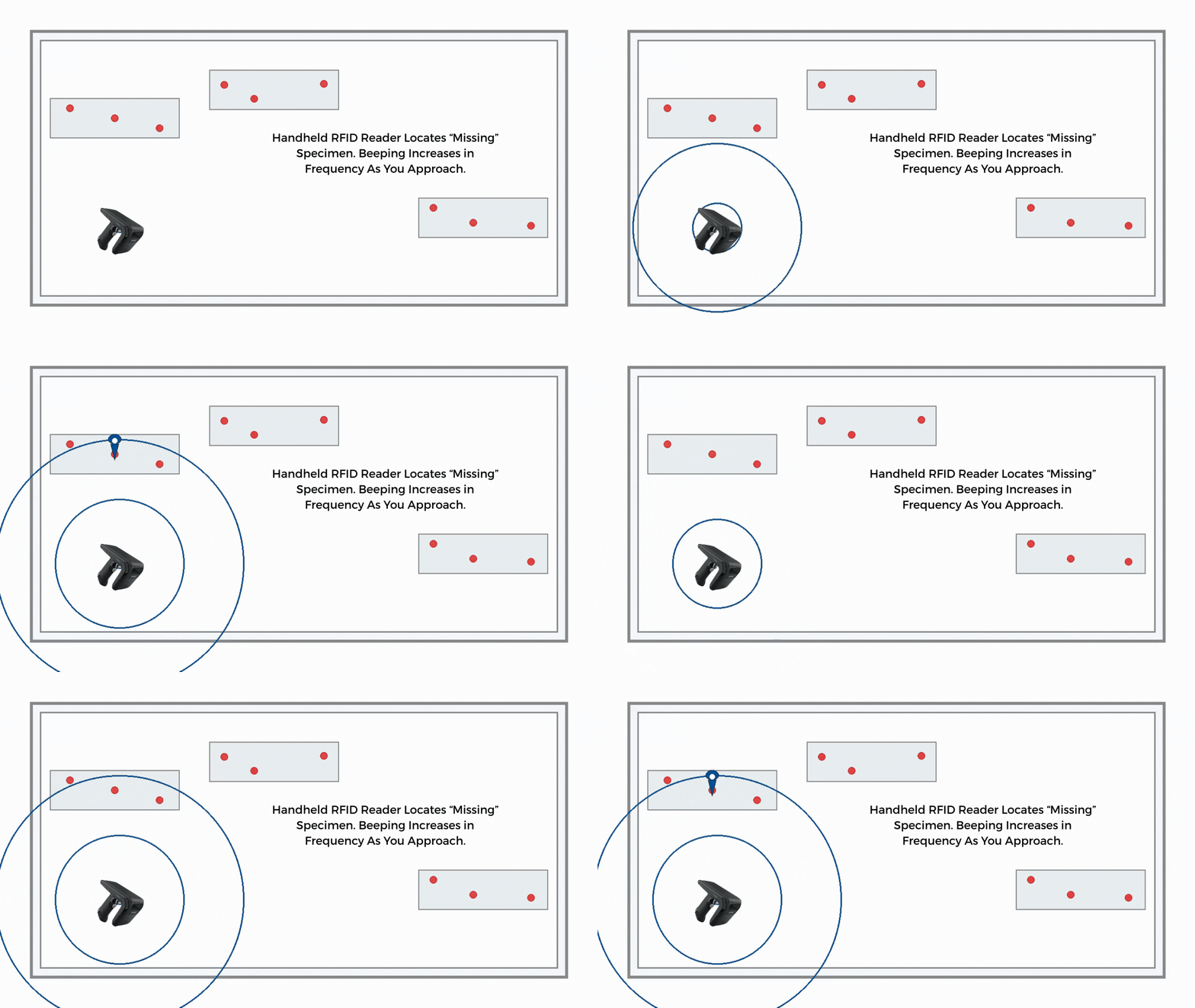
When a specimen is not where it should be, recovery is straightforward. Teams check the last observed location and use a handheld RFID reader to perform a proximity search. Signal strength increases and audible cues guide staff directly to the shelf, cart, or cooler where the specimen resides, often within minutes.
For refrigerated or frozen specimens, temperature data loggers can record pass or fail status alongside custody events, supporting quality standards and accreditation requirements.
Every hospital is different, but effective hospital specimen tracking follows consistent movement patterns.
These placements reflect how specimens actually move through the organization. They remove manual steps while increasing reliability and auditabili
Hospitals implementing RFID-based specimen tracking in the OR see measurable operational and clinical benefits.
Search time drops dramatically, reducing delays and re-collections. OR teams avoid unnecessary re-sterilization cycles tied to specimen uncertainty. Pathology receives specimens with a complete, defensible chain of custody.
Quality and compliance teams gain a single source of truth for time, location, and temperature where required. Leaders gain visibility into where handoffs break down and where automation removes risk.
Most importantly, the approach is staff friendly. Fixed readers automate routine events. Handhelds are used only for exceptions. This aligns with broader healthcare trends toward passive data capture, reduced cognitive load, and fewer workarounds, all priorities highlighted in the Zebra Technologies Healthcare Vision Study.

A case begins and the specimen label and RFID tag are printed together. The sealed container leaves the sterile field and a fixed reader records exit from the OR core. Dispatch confirms pickup. Lab receiving logs arrival and reads tags inside the bag or cooler, matching them to expected LIS orders.
Accessioning follows, with storage status recorded until processing in Histology or Cytology. If anything does not match, staff initiate a proximity search from the last observed location and resolve the exception quickly, before delays escalate.
Hospitals evaluating OR specimen tracking should monitor:
IDNs achieve the best results by establishing a standard specimen tracking model and rolling it out in phases. Many start with a receiving portal and handheld recovery on a high-volume route. As volume grows, exit portals are added at busy OR cores to remove manual steps.
Label policies, read-zone placement, dashboards, and alerts are then standardized across hospitals. Integrations pass custody events to the LIS through interface engines or approved APIs. Data retention and access controls align with CAP and Joint Commission requirements.
Schedule an in-person or remote demo for your OR, Pathology, and operational leadership. Call (425) 438-2533 or contact us online. Visit our Healthcare Resources hub or explore additional guidance on preventing specimen mix-ups with RFID-based chain of custody for Pathology, Histology, and Cytology.
Every hospital and medical device leader knows the feeling when something important is missing and everyone is scrambling to find it. A bed, a pump, a sterile tray, a specimen, a loaner kit. It happens every day, and each missing item slows the workflow, increases stress, and erodes confidence in the system.
On April 22, 2026, that challenge — and the solutions already reshaping healthcare — will take center stage. ID Integration and Zebra Technologies are joining forces to host the Track & Trace Transformation Summit in Lincolnshire, Illinois. The one-day, executive-level forum focuses on how RFID and AI are helping hospitals and manufacturers build more reliable, connected, and efficient operations.
Healthcare is operating under intense pressure. Staffing is tight, budgets are strained, and compliance demands continue to grow. Meanwhile, patients and clinicians expect faster, safer, and more coordinated care.
Technology cannot solve every challenge, but real-time visibility can eliminate the guesswork that fuels delays, loss, and manual effort. RFID shows teams where assets, trays, and specimens are at any moment. Combined with AI, that same visibility becomes predictive, enabling leaders to anticipate needs, reduce waste, and ensure nothing critical slips through the cracks.
Picture a surgical tray that’s always ready before the surgeon asks, or a pump that’s easy to find instead of hiding in another department. Picture specimens moving through the hospital with complete chain-of-custody confidence. Picture device manufacturers tracking inventory from cleanroom to customer, improving quality and recall readiness.
That kind of visibility isn’t futuristic anymore. It’s already happening in hospitals that have decided to take control of their data.
The summit has concluded. Review the Summit replay and takeaways.
Designed as a working forum, the Track & Trace Transformation Summit 2026 is not a typical conference. It brings together healthcare executives, operations leaders, IT specialists, and medical device manufacturers for a full day of shared learning and problem-solving.
Throughout the day, participants will hear from early adopters who have deployed RFID and AI to improve utilization, reduce loss, strengthen compliance, and gain measurable ROI. Speakers will share what worked, what didn’t, and what’s next.
This event is for professionals who are ready to drive meaningful changes in their organizations, including:
If you’re looking to improve asset visibility, reduce waste, and strengthen operational efficiency, this Summit will give you the insights and tools to make it happen.
ID Integration and Zebra Technologies have partnered for years to help hospitals and manufacturers modernize tracking systems and workflows. Together, we share a mission to give healthcare professionals more control, more visibility, and more confidence in the tools they rely on every day.
This Summit is not a lecture. It’s a working session. You’ll exchange ideas, ask questions, challenge assumptions, and leave with a clear, actionable plan you can begin using right away.
Date: April 22, 2026
Location: Zebra Technologies Headquarters – Lincolnshire, IL
Audience: Hospital and medical device manufacturing leaders
Hosts: ID Integration & Zebra Technologies
Join the community of leaders who are reshaping hospital operations through better data, better visibility, and smarter technology.
Learn more and register: Track & Trace Transformation Summit 2026 (Registration has been closed)
Together, we can build the connected healthcare systems of the future.
Every specimen collected in a hospital or clinic carries enormous weight: a cancer diagnosis, a life-changing prognosis, a decision that could alter treatment forever. Within Pathology, Histology and Cytology specimens are especially high-risk. They are irreplaceable once collected and often determine definitive care plans. Yet every year, healthcare facilities lose track of thousands of biopsy samples, tissue specimens, cytology preparations, and surgical materials.
These are not small mistakes. A lost tumor, a mislabeled biopsy, or a switched sample can force unnecessary surgeries, delay lifesaving treatments, and destroy patient trust.
In 2022, a patient at the University of Washington Medical Center Northwest had a bladder tumor removed. The tissue sample, which was critical for determining whether cancer remained, was lost before it could be tested. The patient endured repeated procedures and months of uncertainty. The incident led to a lawsuit and national headlines in The Washington Post and Becker’s Hospital Review.
A similar case in North Carolina, reported by WSOC-TV, involved a breast cancer patient whose tumor specimens disappeared after initial chemotherapy. With no way to determine if treatment had worked, she faced another six months of chemotherapy without any clear guidance.
In another case documented by SVMIC, a medical malpractice insurer, two patients’ prostate biopsy specimens were switched. One man underwent an unnecessary prostatectomy, while the actual cancer patient went untreated. DNA testing later revealed the devastating mix-up.
These stories show how specimen errors, though statistically rare, can have catastrophic consequences for both patients and hospitals.
Takeaway: Even one misplaced tumor specimen can cascade into repeated surgery, delayed treatment, and significant legal risk.

Specimen handling involves a complex chain of custody: collection in procedure rooms, operating rooms, and specialty clinics; labeling; temperature-appropriate storage; courier handoff; transport; accessioning; and processing in the Histology and Cytology labs.
Every hand-off introduces risk:
Many healthcare facilities still rely on manual logging or barcode-only systems that depend heavily on human diligence. In high-volume environments, this leaves too many opportunities for specimens to be misplaced, swapped, delayed, or temperature-compromised.
Peer-reviewed studies show that specimen provenance errors (SPCs), including swaps and contaminations, affect nearly 1% of biopsies.
Type 1 (swaps): 0.26%
Type 2 (contaminations): 0.67%
(Source: Pfeifer JD et al., 2013; American Journal of Clinical Pathology)
With millions of biopsies performed each year in the United States, that fraction translates to tens of thousands of compromised specimens. A follow-up study in the Journal of Urology estimated that SPCs lead to about 4,500 false diagnoses and nearly $880 million in avoidable costs annually. Even more troubling, these figures likely understate the problem because many incidents are caught internally, settled confidentially, or never reported.

Before a specimen ever reaches Histology or Cytology, pre-analytic controls protect integrity:
Explore the OR-to-lab workflow guide for an example of configured custody checkpoints.
Modern hospitals and clinics are adopting RFID-enabled specimen tracking to close custody and temperature gaps—especially for Histology and Cytology workflows where specimens are irreplaceable.
Unlike barcodes, RFID does not require line-of-sight scanning. It works automatically, even through sealed specimen containers while reducing dependence on manual steps and resulting in fewer misses and better pre-analytic compliance.
Barcode: requires manual scanning, line-of-sight, and multiple human touches
RFID: automatic, non-line-of-sight, reads through bags/containers, hands-free checkpoints
Most barcode-only systems do not record container-level temperature exposure during courier legs or staging. RFID-enabled temperature logging closes this gap, ensuring both custody and integrity are captured in one unified record.
At-a-glance differences for custody, recovery, and cold chain
| Capability | Passive RFID | Barcode |
|---|---|---|
| Reads many items at once | ✓ Yes | X No |
| Line-of-sight required | X No | ✓ Yes |
| Automated custody at handoffs | ✓ Yes | X Manual Scans |
| Last-seen location for recovery | ✓ Yes | X No |
| Receiving auto-reconcile (expected vs. received) | ✓ Yes | X No |
| Works through sealed containers | ✓ Yes | X No |
| Cold-chain result recorded with custody | ✓ Yes | Manual Step |

A single lost Histology or Cytology specimen can trigger million-dollar claims, reputational damage, and profound harm to the patient. RFID-based chain-of-custody, coupled with simple temperature checks for lab boxes and coolers, creates a closed loop across collection, staging, courier legs, and lab receipt.
By modernizing specimen chain-of-custody workflows, healthcare organizations can:
Reach out to schedule a consultation or call (425) 438-2533 to explore RFID specimen tracking for your hospital or clinic.
To see how healthcare systems are closing the loop on specimen tracking with real-world results, read our in-depth article, "No Specimen Left Behind: Passive RFID Specimen Tracking for Hospitals and IDNs."
This companion piece explains how passive RFID works within complex environments—from collection to Histology and Cytology—so no specimen, and no patient, is left behind.
Browse more automation and asset tracking resources for healthcare here.
Every day in hospitals, sterile processing teams and OR staff run into the same frustrating problem: surgical tray tracking and visibility.
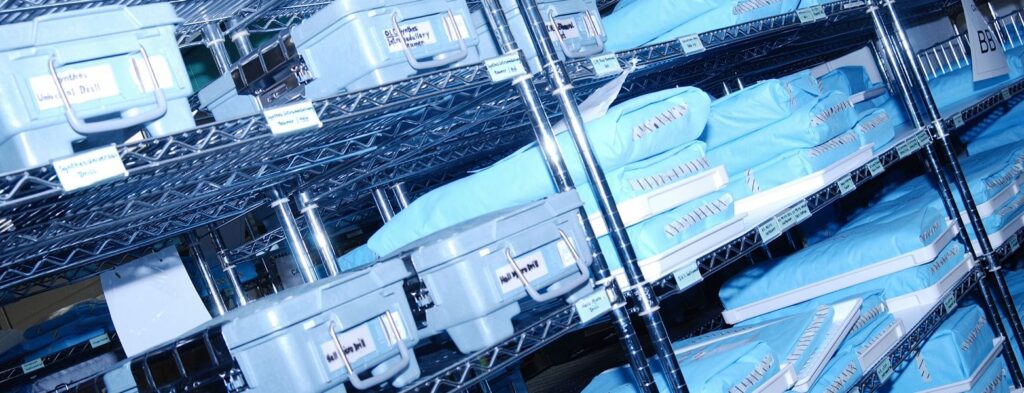
Sterilized and wrapped trays all look the same making them hard to identify and even harder to track as they move between sterile processing, storage, and operating rooms. When visibility is lost, the ripple effect is immediate with surgeries delayed or canceled, staff pulled away from patient care, trays unnecessarily re-sterilized, and costs that quickly add up.
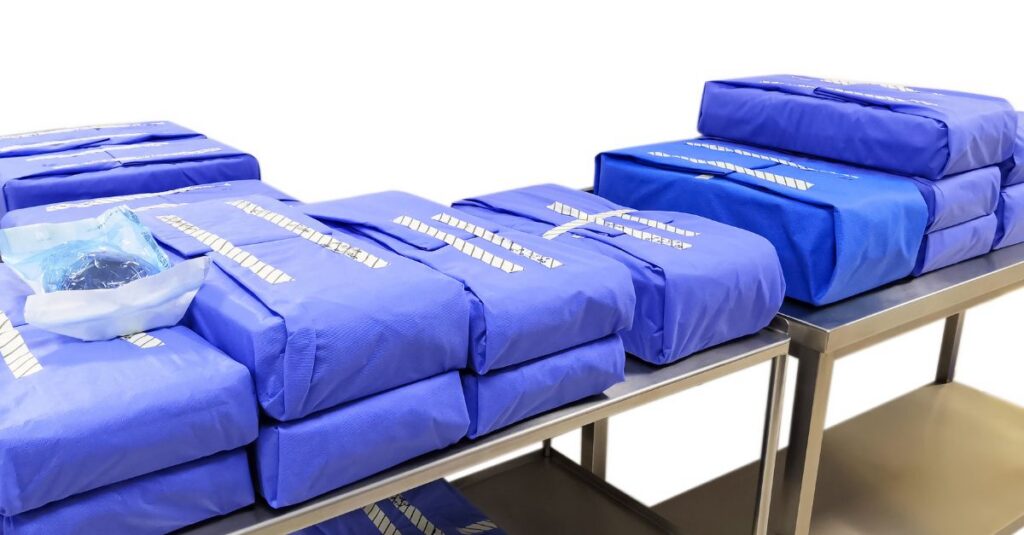
We believe there’s a better way. Passive RFID offers a cost-effective, practical path to improve surgical tray tracking, strengthen sterile services tracking, and streamline surgical workflow solutions — without adding burden to already overworked teams.
Surgical trays are essential to every operating room. They are:
Yet despite their importance, trays are frequently misplaced or delayed:
Surgery delays and cancellations occur when trays go missing.
According to recent research, time spent searching for or replacing missing instruments significantly disrupts OR cases, draws staff away from patient care, delays starts, and even keeps patients under anesthesia longer than necessary (BMC Surgery, 2024).
Sterile packaging complicates identification.
Once a tray is wrapped, staff cannot confirm its contents without breaking the seal and re-sterilizing. Each re-sterilization can cost $100–$200 per tray.
Errors are underreported.
Staff-driven reporting regarding missing trays often underestimates the true frequency of these disruptions, despite their critical operational impact (BMC Surgery, 2024).
Failures in visualization.
Patterns in reported errors point to visualization as a critically weak point in sterile processing of instruments (Perioperative Care and Operating Room Management, 2023).
High replacement costs.
Tray loss is expensive for manufacturers and distributors. This is because there are hundreds of thousands of trays in circulation, valued from $3,000 to more than $200,000 each. Even a small percentage of lost or misdirected trays results in millions of dollars wasted each year.
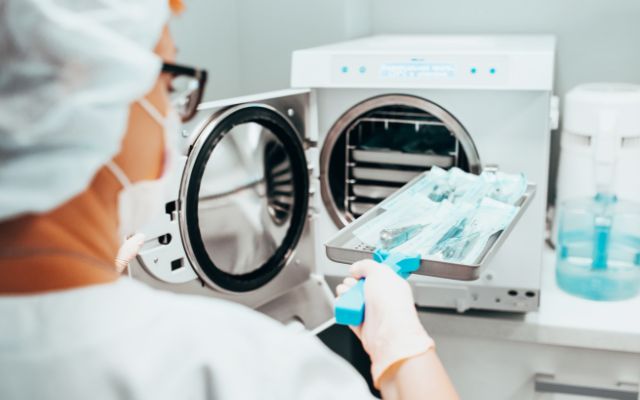
Passive RFID technology offers a smarter alternative to expensive active tracking solutions. Hospitals and manufacturers gain real surgical tray visibility without ongoing per-tray fees by embedding RFID tags in surgical trays and installing fixed and handheld readers at key checkpoints.
Reliable checkpoint capture depends on read-environment design and validation.
The results:
Right tray, right time
Improved patient safety and fewer surgical delays.
Lower costs
Less sterilization waste, fewer replacements, and streamlined logistics.
Operational efficiency
SPD teams spend less time on redundant tasks, improving overall surgical workflow solutions.
Regulatory readiness
Automated data supports compliance with Joint Commission and FDA standards.
Hospitals and medical device companies that implement surgical tray tracking with passive RFID have seen:
Passive RFID turns surgical trays from a hidden liability into a visible, managed asset.
The next evolution in surgical tray tracking will be built on collaboration. Imagine a model where:
This vision of shared visibility with protected data represents the future of surgical tray management. Every tray traceable, every stakeholder with clarity, blind spots eliminated.
We are already helping healthcare organizations move toward this future by implementing passive RFID for surgical tray visibility and sterile services tracking. Every missing tray means more stress for SPD and OR staff, more wasted hours, and more risk of delay for patients. Passive RFID can change that.
Let’s connect and walk through how it could work in your hospital.
A. Once trays are wrapped and sterilized, they all look the same. Staff often spend valuable time searching, re-sterilizing, or replacing trays, which leads to delays, wasted labor, and higher costs.
A. Passive RFID tags can be scanned without line-of-sight, even through sterile packaging. This allows staff to instantly identify trays without breaking the seal, which saves time and prevents unnecessary re-sterilization.
A. Many hospitals report payback in as little as three months. RFID reduces sterilization waste, prevents tray loss, and streamlines workflows, often saving hundreds of thousands of dollars each year.
A. Automated RFID data provides accurate records for Joint Commission and FDA requirements, improving audit readiness and strengthening sterile services tracking.
A. Yes. RFID not only improves surgical tray tracking but also integrates with wider surgical workflow solutions, helping hospitals optimize tray contents, reduce redundant sets, and improve OR throughput.
When a specimen goes missing, care plans stall and trust suffers. Manual steps and line-of-sight scans leave gaps that are hard to manage across a network. This guide shows hospitals and IDNs how to use RFID specimen tracking to secure the chain of custody, locate items quickly, and standardize processes across sites.
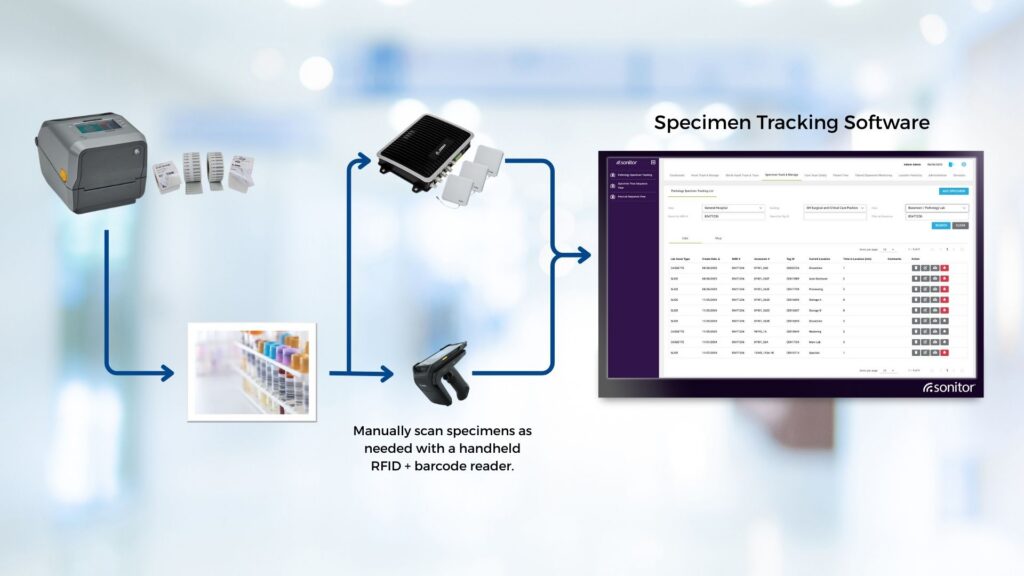
In many cases, the barcode remains the specimen identifier and print workflow. Passive RFID adds the time and place events you cannot get from line-of-sight scans, along with rapid recovery tools.
RFID labels at collection
Apply a passive RFID label when you print the specimen label. The tag carries a non-PHI key that links to the LIS order number (accession). Hospitals typically either encode the RFID at print time or use pre-encoded RFID labels and associate them with the LIS order number with a hybrid scanner.
Fixed readers at handoffs
Readers and antennas are typically mounted overhead and placed at defined checkpoints such as unit exits, pneumatic-tube entry/exit, lab receiving thresholds, refrigerators and freezers, and processing benches. These automate movement events without extra steps for staff.
Handheld recovery
If a sample is misplaced, a handheld RFID reader guides staff by signal strength. Search time drops from minutes to seconds in many environments, and the last-seen zone narrows the hunt.
See RFID specimen tracking in action.
Contact us to schedule an in-person or remote demo for your hospital or IDN.
RFID portals capture custody at collection and at receiving. To keep custody continuous while a specimen is moving, combine fixed readers at key thresholds with simple handheld steps where portals are not practical.
Pick up checkout at the unit:
Use a handheld RFID reader to associate each specimen’s RFID tag with a bag or cooler ID and record the LIS order numbers inside. In high-volume units, a short-range bench reader can automate this association as items are packed.
Automatic departure event:
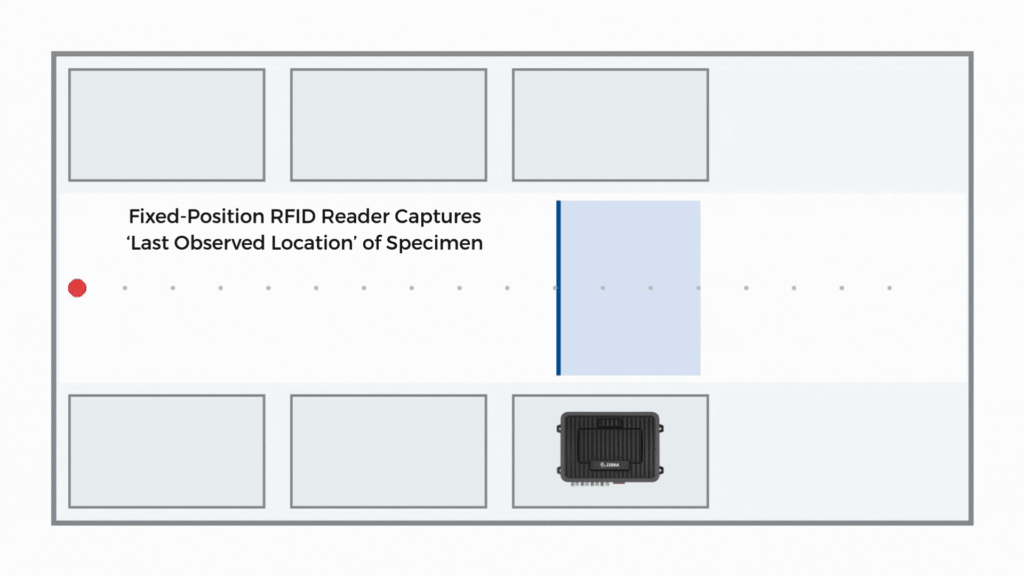
Install a fixed RFID reader at the unit exit or dispatch hub. When the bag passes through, the system records a departure event and starts an expected arrival timer for the route.
Automated arrival at receiving:
Place a fixed reader in the receiving threshold. As the bag crosses, the system logs arrival, reads the specimen tags inside, and reconciles which LIS orders were expected versus received. Any missing or unexpected items are flagged immediately.
Exception handling and recovery:
If the route timer expires or reconciliation shows a gap, staff use a handheld to perform a proximity search along the courier path, storage areas, or staging racks. The handheld guides the search by signal strength to shorten the time to find.
Cold chain, when required:
For refrigerated specimens, place a simple temperature logger inside the cooler. On arrival, the system records a pass or fail result alongside the custody events.
Pneumatic tube checkpoints:
Place read zones at tube entry and exit to log custody as specimens move between buildings.
Start small. Many hospitals begin with a receiving portal and a handheld checkout at the unit. As volume grows, add unit exit portals on the busiest routes to remove manual steps and tighten timing.
Focus on network standards, exception control, and scale.
•Tag and label policy: approved RFID labels by container and temperature range, link each tag to the LIS order number.•Read-zone patterns: unit checkout bench or handheld, unit exit portal on high volume routes, receiving portal, cold storage spot reads.
•Bag and cooler IDs: consistent IDs for courier containers with simple association to included LIS orders.
•Privacy and retention: non-PHI on tags, event retention rules, audit log access.
•Missed arrival: timer starts at unit exit. If receiving does not see the bag within the route window, alert the team.
•Partial receipt: receiving reconciliation flags LIS orders expected but not seen. Open a task to locate.
•Unreadable tag or damaged label: fall back to barcode, re-tag, and capture a correction event.
•Cold chain fail: temperature logger result posts pass or fail beside the custody trail.
•Clinical operations: nursing and phlebotomy pack and associate to bags, request pickup.
•Courier services: move through exit portals, confirm pickup if handheld is used, and deliver through the receiving portal.
•Lab receiving: reconcile expected versus received, handle exceptions, re-tag when needed.
•Hospital IT and InfoSec: provide network access, device whitelisting, identity and SSO, endpoint management, change control, and security validation.
•Implementation partners: manage reader and antenna configuration, middleware, LIS and EHR interfaces, dashboards, and alert rules under a support agreement. Provide training and Tier 2 and Tier 3 support, monitor read rates and portal health, perform preventive maintenance, and handle releases.
•Technology vendors: supply hardware, firmware, and application updates, warranty service, and Tier 3 escalation through the implementation partners.
•Quality and compliance: review exception trends, audit trails, and KPI performance, and prepare evidence for CAP and Joint Commission.
•Support flow: Hospital service desk handles Tier 1. Implementation partners handle Tier 2 and Tier 3 under a support agreement.
•Events to LIS: write time and place events tied to the LIS order number. Tags carry a non-PHI key.
•Operational visibility: dashboards show last seen zone, route timers, receiving reconciliation, and cold chain status where required. Alert on exceptions only.
•Security and governance: SSO, role-based access, audit logs, and device network segmentation with standard change control.
•Interfaces and reliability: use the hospital interface engine or approved APIs. Buffer and replay during outages. Design events to avoid duplicates.
•Retention: align custody event retention with quality and accreditation requirements.
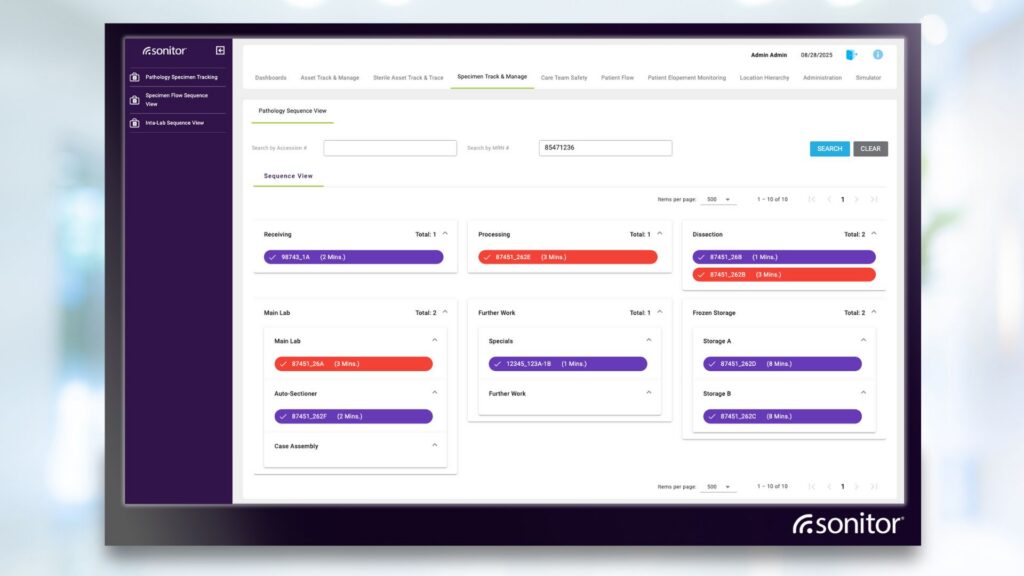
•Workflow views: a list view supports search and filter by location, specimen type, date, LIS order number, and sequence. A sequence view shows progress by state with time-in-stage thresholds and color-coded alerts. Location updates can be automatic from RFID infrastructure or added manually from handheld RFID or barcode scans.
Phase 1: receiving portal plus handheld checkout on one high-volume route
Phase 2: add unit exit portals on the busiest floors
Phase 3: extend to the courier hub and cold storage zones
Phase 4: onboard ambulatory clinics and send-outs with the same patterns
Phase 5: standardize across hospitals with super user model and central governance.
| Lost or delayed specimens per 10,000 LIS orders. | Cold chain failures per 1,000 cooled shipments. |
| Average time to locate a missing item. | Re-collection rate and cost avoidance. |
| Collection to receipt turnaround by priority class. | Percentage of specimens compliant within time-in-stage thresholds. |
| Percentage of LIS orders with complete custody events. |
A. Yes, with the right label and placement. Validate with a detailed site survey.
A. No. Barcode remains the identifier. RFID adds automated custody and location.
A. Fixed readers automate most events. Handheld steps focus on checkout or exception recovery.
A. Many pilots complete in six to eight weeks after a paid site survey and design.
A. Yes. Deployments can be cloud-hosted or on-premises, aligned with hospital IT policies.
A. Yes. Manual location updates from a handheld RFID scan or a barcode scan can write a location event into the record.
Schedule an in-person or remote demo for your hospital or IDN. Call us at (425) 438-2533 or contact us here. Curious about more use cases for healthcare automation? Download our Solutions Guide, “Creating Better Visibility Across Healthcare Operations.”