
Healthcare organizations are under increasing pressure to reduce delays, improve workflow coordination, and operate with greater certainty across clinical and operational environments.
When a specimen cannot be verified, when a surgical tray is missing before the first case, or when clinicians spend valuable time searching for equipment, operational delays ripple throughout the hospital.
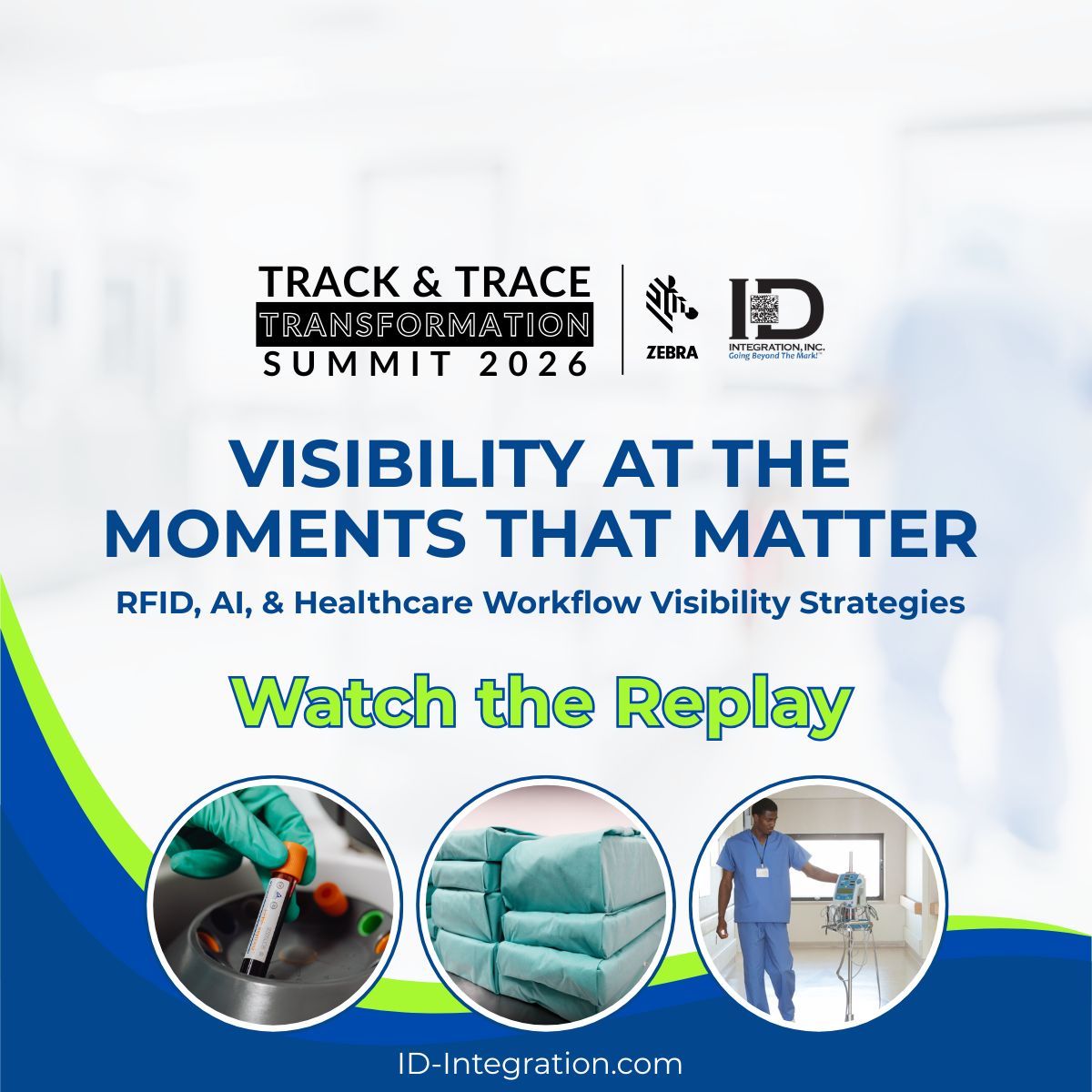
At the Track & Trace Transformation Summit 2026 hosted by ID Integration and Zebra Technologies, healthcare leaders explored how RFID, AI, and event-based visibility strategies are helping hospitals reduce operational blind spots tied to specimens, surgical trays, mobile assets, and inventory workflows.
Key Topics Discussed During the Summit
- •Navigating healthcare operational efficiency challenges
- •AI for frontline healthcare operations
- •Passive RFID and event-based visibility strategies
- •Specimen tracking and chain-of-custody confidence
- •Healthcare asset tracking and workflow coordination
- •Scaling visibility initiatives from pilot to platform
- •Governance and operational alignment strategies
- •Operational intelligence and connected healthcare workflows
- •Reducing workflow uncertainty across healthcare environments
- •The future of digital healthcare operations
Visibility at the Moments That Matter
One of the core themes throughout the summit was that healthcare organizations do not necessarily need continuous location tracking for every item or workflow.
They need certainty at the workflow moments where delays, risk, and uncertainty create operational consequences.
That includes moments such as:
- •confirming specimen collection and chain of custody
- •locating critical mobile equipment
- •verifying surgical tray readiness
- •understanding where workflow delays occur
- •reducing manual searches and coordination
- •improving confidence in operational handoffs
As staffing pressures and operational complexity continue to increase, healthcare organizations are looking for ways to reduce workflow uncertainty while improving coordination across departments and teams.
The summit discussions focused heavily on how passive RFID, AI-driven insights, and connected operational workflows can help healthcare organizations move beyond isolated pilot projects toward scalable visibility strategies that support broader digital operations initiatives.
“Hospitals do not need to track everything everywhere. They need certainty at the workflow moments where delays, risk, and uncertainty create operational consequences.”
Watch the Summit Replay
The full replay includes presentations and discussions focused on reducing operational blind spots, improving workflow coordination, and building more connected healthcare operations through RFID, AI, and event-based visibility strategies.
To learn more about healthcare visibility and automated traceability solutions, visit our Resources page.
Organizations evaluating specimen tracking, surgical tray visibility, healthcare asset tracking, or broader operational visibility strategies can also explore ID Integration’s field guides and workflow resources:
Continue the Conversation
Healthcare organizations continue to evaluate how RFID, AI, and connected operational workflows can reduce delays, improve coordination, and support greater workflow certainty across complex healthcare environments.
If your organization is exploring healthcare asset tracking, specimen tracking, surgical tray visibility, or broader operational visibility strategies, ID Integration can help you evaluate practical approaches aligned with your workflows and operational goals. Contact us for a personalized online or in-person demo.