A healthcare RTLS implementation can include tags, location infrastructure, software, maps, workflow rules, and integrations with other clinical or operational systems. Coverage, accuracy, mounting, power, network requirements,
security, device management, and long-term maintenance all influence the design.
Location data becomes more useful when it can inform the systems and workflows that depend on it. Depending on the application, RTLS events can support asset searches, equipment utilization analysis, patient-flow workflows, staff response processes, alerts, dashboards, and other operational systems. ID Integration considers both how location will be determined and how that information needs to move through the healthcare environment.
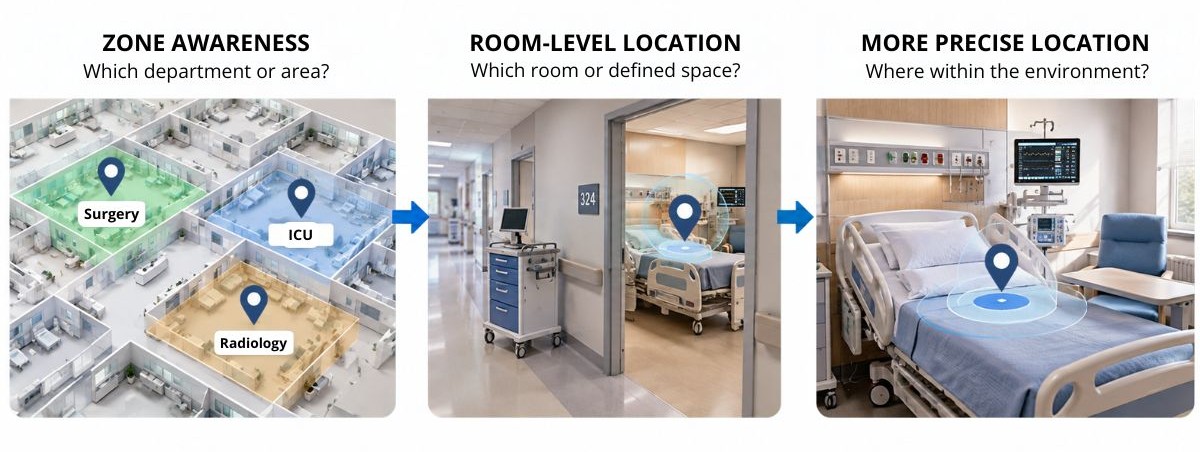
Modern healthcare RTLS platforms may combine multiple locating technologies to provide different levels of coverage and precision across the same enterprise. ID Integration evaluates the environment and workflow requirements before recommending the appropriate architecture.
RTLS design can also account for privacy, governance, data retention, system access, security requirements, and the policies surrounding location information, particularly when workflows involve patients or staff.