
The Unseen Patient Safety Crisis
Every specimen collected in a hospital or clinic carries enormous weight: a cancer diagnosis, a life-changing prognosis, a decision that could alter treatment forever. Within Pathology, Histology and Cytology specimens are especially high-risk. They are irreplaceable once collected and often determine definitive care plans. Yet every year, healthcare facilities lose track of thousands of biopsy samples, tissue specimens, cytology preparations, and surgical materials.
These are not small mistakes. A lost tumor, a mislabeled biopsy, or a switched sample can force unnecessary surgeries, delay lifesaving treatments, and destroy patient trust.
When a Lost Specimen Becomes a Life-Changing Error
In 2022, a patient at the University of Washington Medical Center Northwest had a bladder tumor removed. The tissue sample, which was critical for determining whether cancer remained, was lost before it could be tested. The patient endured repeated procedures and months of uncertainty. The incident led to a lawsuit and national headlines in The Washington Post and Becker’s Hospital Review.
A similar case in North Carolina, reported by WSOC-TV, involved a breast cancer patient whose tumor specimens disappeared after initial chemotherapy. With no way to determine if treatment had worked, she faced another six months of chemotherapy without any clear guidance.
In another case documented by SVMIC, a medical malpractice insurer, two patients’ prostate biopsy specimens were switched. One man underwent an unnecessary prostatectomy, while the actual cancer patient went untreated. DNA testing later revealed the devastating mix-up.
These stories show how specimen errors, though statistically rare, can have catastrophic consequences for both patients and hospitals.
Takeaway: Even one misplaced tumor specimen can cascade into repeated surgery, delayed treatment, and significant legal risk.
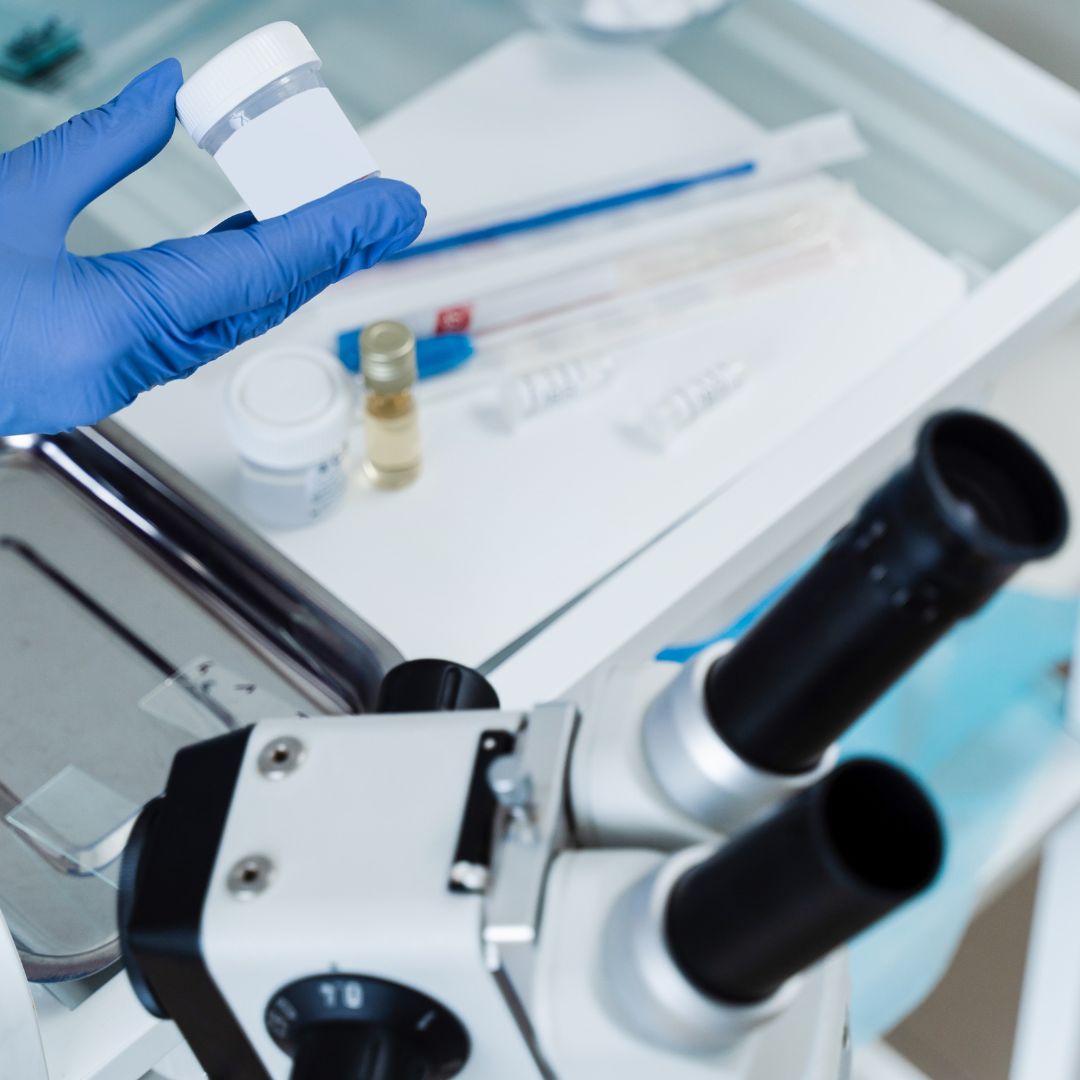
Why Lost Specimens and Mix-Up Errors Happen
Specimen handling involves a complex chain of custody: collection in procedure rooms, operating rooms, and specialty clinics; labeling; temperature-appropriate storage; courier handoff; transport; accessioning; and processing in the Histology and Cytology labs.
Every hand-off introduces risk:
• Mislabeling or illegible handwriting
• Unsealed or unlabeled containers
• Manual data entry mistakes
• Courier mix-ups or lost bags
• Temperature exposure during staging or transport
• Failure to confirm arrival in the lab
Many healthcare facilities still rely on manual logging or barcode-only systems that depend heavily on human diligence. In high-volume environments, this leaves too many opportunities for specimens to be misplaced, swapped, delayed, or temperature-compromised.
The Real Numbers Behind the Problem
Peer-reviewed studies show that specimen provenance errors (SPCs), including swaps and contaminations, affect nearly 1% of biopsies.
Type 1 (swaps): 0.26%
Type 2 (contaminations): 0.67%
(Source: Pfeifer JD et al., 2013; American Journal of Clinical Pathology)
With millions of biopsies performed each year in the United States, that fraction translates to tens of thousands of compromised specimens.
A follow-up study in the Journal of Urology estimated that SPCs lead to about 4,500 false diagnoses and nearly $880 million in avoidable costs annually.
Even more troubling, these figures likely understate the problem because many incidents are caught internally, settled confidentially, or never reported.
Pre-Analytic Controls: Temperature and Handling Discipline for Cold-Chain Compliance of Medical Specimens
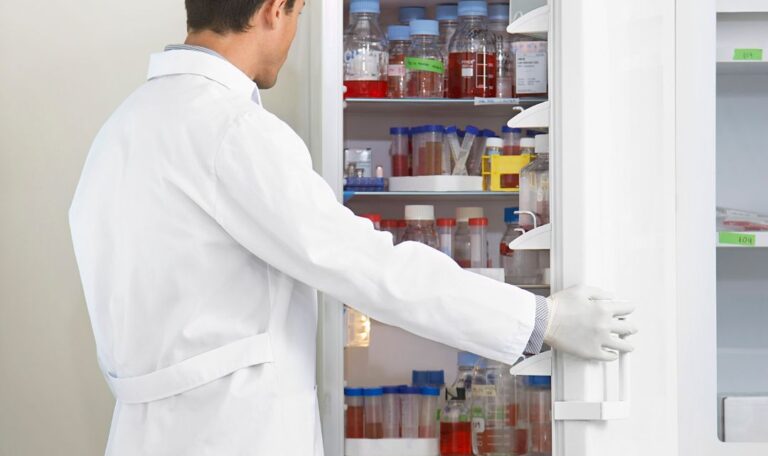
Before a specimen ever reaches Histology or Cytology, pre-analytic controls protect integrity:
• Cold-chain requirements vary by specimen: some must remain frozen, some refrigerated, others at room temperature.
• Lab boxes and courier coolers often need temperature sensors or loggers to confirm conditions during staging and transport.
• Phlebotomy and collection teams are typically required to record daily temperature checks for refrigerators/freezers used to store specimens prior to transport. These checks are commonly implemented as checklist items and logged for audit readiness.
• In practice, policies and adherence can vary by site, which is why trace-and-track protocols are essential. The more hands that touch a specimen without automated custody and temperature traceability, the higher the chance of delay, loss, or integrity failure.
RFID: The Technology That Closes the Chain-of-Custody Gaps
Modern hospitals and clinics are adopting RFID-enabled specimen tracking to close custody and temperature gaps—especially for Histology and Cytology workflows where specimens are irreplaceable.
With RFID (Radio Frequency Identification):
• Each specimen receives a unique, encoded tag at the point of collection (paired to the LIS order)
• Fixed readers at doorways, hall thresholds, and pathology receiving areas create automatic custody checkpoints
• Handheld readers enable rapid “last-seen” search when an item is misplaced
• Chain-of-custody logs provide digital traceability for every handoff
• Real-time alerts flag delays or missing items before they become critical
• Cold-chain support: temperature loggers placed in lab boxes or coolers post a pass/fail result alongside custody events at receiving, so teams see both arrival and integrity at once
Unlike barcodes, RFID does not require line-of-sight scanning. It works automatically, even through sealed specimen containers while reducing dependence on manual steps and resulting in fewer misses and better pre-analytic compliance.
Barcode: requires manual scanning, line-of-sight, and multiple human touches
RFID: automatic, non-line-of-sight, reads through bags/containers, hands-free checkpoints
Most barcode-only systems do not record container-level temperature exposure during courier legs or staging. RFID-enabled temperature logging closes this gap, ensuring both custody and integrity are captured in one unified record.
Specimen Tracking: RFID vs. Barcode
At-a-glance differences for custody, recovery, and cold chain
| Capability | Passive RFID | Barcode |
|---|---|---|
| Reads many items at once | ✓ Yes | X No |
| Line-of-sight required | X No | ✓ Yes |
| Automated custody at handoffs | ✓ Yes | X Manual Scans |
| Last-seen location for recovery | ✓ Yes | X No |
| Receiving auto-reconcile (expected vs. received) | ✓ Yes | X No |
| Works through sealed containers | ✓ Yes | X No |
| Cold-chain result recorded with custody | ✓ Yes | Manual Step |
What RFID Specimen Tracking Delivers for Pathology, Histology, and Cytology:
• Prevents lost or swapped specimens with automatic waypoints and reconciliation
• Confirms timely delivery to accessioning with route timers and arrival alerts
• Documents temperature compliance as part of the chain of custody
• Reduces litigation exposure and strengthens patient trust with a defensible record
The Bottom Line for Hospitals and Clinics
A single lost Histology or Cytology specimen can trigger million-dollar claims, reputational damage, and profound harm to the patient. RFID-based chain-of-custody, coupled with simple temperature checks for lab boxes and coolers, creates a closed loop across collection, staging, courier legs, and lab receipt.
By modernizing specimen chain-of-custody workflows, healthcare organizations can:
• Eliminate preventable errors
• Empower staff with real-time visibility
• Prove compliance with temperature and custody policies
• Demonstrate regulatory diligence
• Protect patients and preserve their peace of mind
Protect Every Specimen and Every Patient
Reach out to schedule a consultation or call (425) 438-2533 to explore RFID specimen tracking for your hospital or clinic.
Learn More
To see how healthcare systems are closing the loop on specimen tracking with real-world results, read our in-depth article, “No Specimen Left Behind: Passive RFID Specimen Tracking for Hospitals and IDNs.”
This companion piece explains how passive RFID works within complex environments—from collection to Histology and Cytology—so no specimen, and no patient, is left behind.
Browse more automation and asset tracking resources for healthcare here.