

Every day in hospitals, sterile processing teams and OR staff run into the same frustrating problem: surgical tray tracking and visibility.
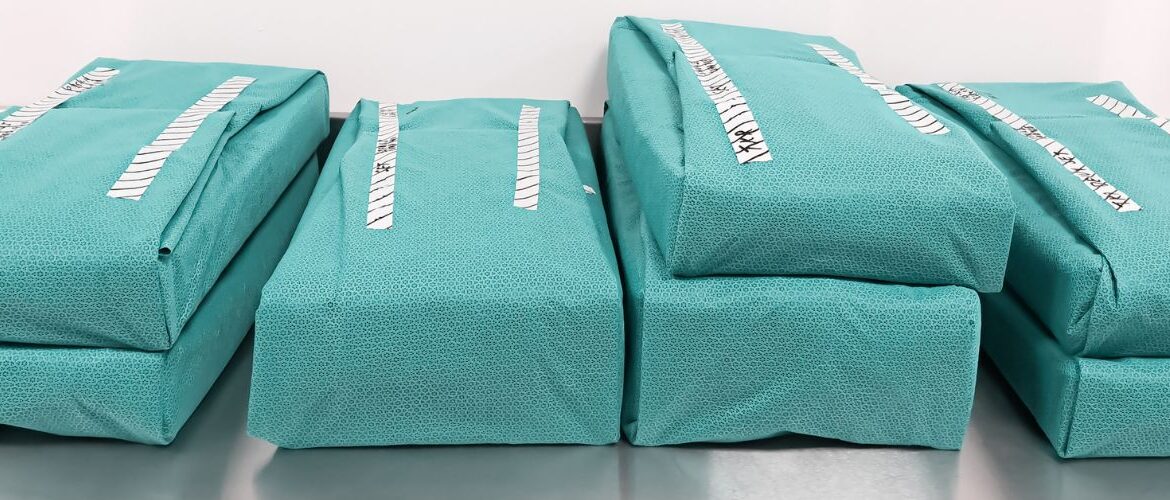
Sterilized and wrapped trays all look the same making them hard to identify and even harder to track as they move between sterile processing, storage, and operating rooms. When visibility is lost, the ripple effect is immediate with surgeries delayed or canceled, staff pulled away from patient care, trays unnecessarily re-sterilized, and costs that quickly add up.

We believe there’s a better way. Passive RFID offers a cost-effective, practical path to improve surgical tray tracking, strengthen sterile services tracking, and streamline surgical workflow solutions — without adding burden to already overworked teams.
The Challenge: Hidden Costs in Surgical Tray Visibility
Surgical trays are essential to every operating room. They are:
- • Assembled with specialized instruments for specific procedures.
- • Sterilized and wrapped to maintain safety.
- • Transported from the Sterile Processing Department (SPD) to ORs and back.
- • Staged and presented aseptically at the point of use.
- • Reprocessed and re-sterilized after each procedure.
Yet despite their importance, trays are frequently misplaced or delayed:
Surgery delays and cancellations occur when trays go missing.
According to recent research, time spent searching for or replacing missing instruments significantly disrupts OR cases, draws staff away from patient care, delays starts, and even keeps patients under anesthesia longer than necessary (BMC Surgery, 2024).
Sterile packaging complicates identification.
Once a tray is wrapped, staff cannot confirm its contents without breaking the seal and re-sterilizing. Each re-sterilization can cost $100–$200 per tray.
Errors are underreported.
Staff-driven reporting regarding missing trays often underestimates the true frequency of these disruptions, despite their critical operational impact (BMC Surgery, 2024).
Failures in visualization.
Patterns in reported errors point to visualization as a critically weak point in sterile processing of instruments (Perioperative Care and Operating Room Management, 2023).
High replacement costs.
Tray loss is expensive for manufacturers and distributors. This is because there are hundreds of thousands of trays in circulation, valued from $3,000 to more than $200,000 each. Even a small percentage of lost or misdirected trays results in millions of dollars wasted each year.
The Solution: Passive RFID for Surgical Workflow Solutions
Passive RFID technology offers a smarter alternative to expensive active tracking solutions. Hospitals and manufacturers gain real-time surgical tray visibility without ongoing per-tray fees by embedding RFID tags in surgical trays and installing fixed and handheld readers at key checkpoints.
How passive RFID works:
- • No line-of-sight required. Wrapped trays can be scanned without breaking sterility.
- • Multiple trays can be read simultaneously, which is ideal for SPD and OR workflows.
- • Tray movement is captured automatically, reducing the need for manual logging.
The results:
Right tray, right time
Improved patient safety and fewer surgical delays.
Lower costs
Less sterilization waste, fewer replacements, and streamlined logistics.

Operational efficiency
SPD teams spend less time on redundant tasks, improving overall surgical workflow solutions.
Regulatory readiness
Automated data supports compliance with Joint Commission and FDA standards.
ROI: Fast Payback, Lasting Savings
Hospitals and medical device companies that implement surgical tray tracking with passive RFID have seen:
- • Payback in as little as three months including faster surgeries, more OR throughput, and higher hospital revenue.
- • Significant annual savings from reduced waste, fewer replacements, and optimized processes.
- • Analytics that help optimize tray contents, forecast demand, and guide smarter capital planning.
Passive RFID turns surgical trays from a hidden liability into a visible, managed asset.
Shared Visibility, Protected Data, A Future Vision
The next evolution in surgical tray tracking will be built on collaboration. Imagine a model where:
- • Hospitals capture tray movements with RFID readers in SPD and ORs.
- • Manufacturers and distributors tag trays at production and track them in their facilities.
- • A secure software platform consolidates this data while ensuring each stakeholder only accesses their own tray information.
This vision of shared visibility with protected data represents the future of surgical tray management. Every tray traceable, every stakeholder with clarity, blind spots eliminated.
Take the Next Step
We are already helping healthcare organizations move toward this future by implementing passive RFID for surgical tray visibility and sterile services tracking.
Every missing tray means more stress for SPD and OR staff, more wasted hours, and more risk of delay for patients. Passive RFID can change that.
Let’s connect and walk through how it could work in your hospital.
FAQs on Surgical Tray Tracking with Passive RFID
Q. Why is surgical tray tracking such a challenge in hospitals?
A. Once trays are wrapped and sterilized, they all look the same. Staff often spend valuable time searching, re-sterilizing, or replacing trays, which leads to delays, wasted labor, and higher costs.
Q. How does passive RFID improve surgical tray visibility?
A. Passive RFID tags can be scanned without line-of-sight, even through sterile packaging. This allows staff to instantly identify trays without breaking the seal, which saves time and prevents unnecessary re-sterilization.
Q. What is the ROI of RFID in surgical tray tracking?
A. Many hospitals report payback in as little as three months. RFID reduces sterilization waste, prevents tray loss, and streamlines workflows, often saving hundreds of thousands of dollars each year.
Q. How does surgical tray tracking support compliance?
A. Automated RFID data provides accurate records for Joint Commission and FDA requirements, improving audit readiness and strengthening sterile services tracking.
Q. Can passive RFID be part of broader surgical workflow solutions?
A. Yes. RFID not only improves surgical tray tracking but also integrates with wider surgical workflow solutions, helping hospitals optimize tray contents, reduce redundant sets, and improve OR throughput.